One of the most powerful ways to understand a child’s world is to observe their play. Play is not only a form of entertainment for children; it is also a fundamental developmental domain where they express themselves, regulate their emotions, and make sense of the world. Therefore, the concept of “safe play” refers to a play environment in which the child is supported both physically and emotionally.
What is Play?
Play is an activity that is enjoyable, internally motivated, often based on imagination, and frequently reflects real-life experiences for the child. During play, the child:
- Has fun
- Gains experiences
- Learns
- Thinks and imagines
- Reinterprets lived experiences
In this sense, play is the most natural way for children to express their inner world.
Types of Play
Children’s play varies depending on their developmental stage and needs. Some common types include:
Imaginative / Role Play: These are games in which the child takes on a character, creates a storyline, and constructs events (e.g., pretend play, doctor games). Through these games, we can observe how the child uses imagination, reflects experiences, and consolidates learning.
Power Play: These games reflect the child’s need to feel control, strength, and test boundaries. The main purpose is for the child to feel powerful and effective—in a sense, to “prove their strength.” These games may emerge as a way to compensate for situations where the child felt inadequate or struggled to regulate emotions during the day. Through power play, children safely experience concepts such as power, dominance, and boundaries in a controlled environment.
Silly Play: These are absurd, rule-free, and often laughter-filled games. In this type of play, laughter is the key element and helps the child relax.
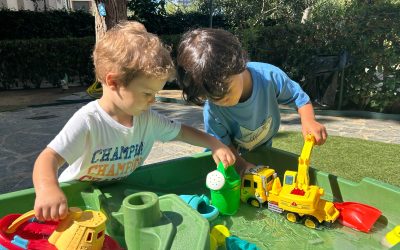
Parallel Play: This is when children play side by side but independently. They may use similar toys and themes but are not expected to engage in the same play. It is commonly seen between ages 2–4.
Functions of Play
Play serves multiple developmental functions at the same time:
- Emotional release: Children express accumulated emotions through play, especially feelings they cannot easily express in real life.
- Processing and regulation: The child re-enacts a situation they have experienced within play, makes sense of it, resolves it, or reflects their emotional response.
- Learning and experience: The child tries and reinforces new information. Especially in imaginative play, it can be observed what they learn, how they learn it, and how they apply it.
- Planning and organization skills: While constructing play, the child uses thinking, sequencing, and organizing skills. How they reflect imagination into play also contributes to the development of these skills. In the process of creating and following game rules, a clear development in planning and organization skills can be observed.
- Enjoyment: Play allows the child to enjoy themselves and relax. This process, together with emotional release, helps the child to regain balance and reach a more regulated emotional state.
Overall, all these functions point to one core principle: reflection. Through play, children reflect their inner world, and through this reflection, learning and processing continue.
What is Safe Play?
Safe play is an environment where the child is both physically safe and emotionally free to express themselves.
In safe play:
- The child’s expression and participation are high. They are in an active participant role.
- The child can freely share their ideas. They do not hesitate to contribute to the play content.
- No physical harm occurs. Therefore, avoidance of physical contact is not observed.
- Emotions show variety and can transform. For example, expressions of anger may turn into relaxation during play.
- The principle of reciprocity is maintained. All participants in the play show equal and active participation.
- The child is comfortable with sharing objects. No difficulty is observed in giving and taking within play.
Safe Peer Play
From age 4 and onward, children begin to realize that they affect one another. This leads to more complex emotional interactions in peer play.
In safe peer play:
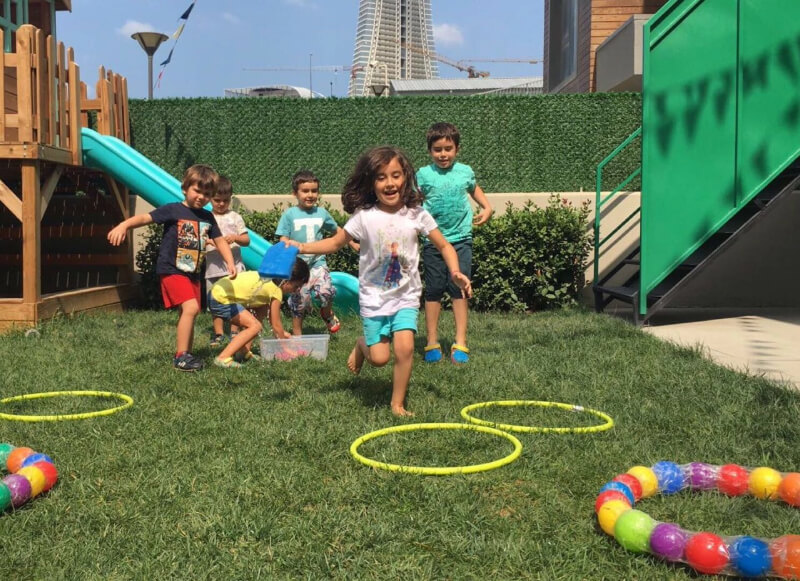
- Both children actively participate.
- Emotions and thoughts are expressed freely. No negative judgment or evaluation of each other’s feelings or thoughts is expected.
- There is shared agreement on game rules. It is understood that the rules apply to everyone.
- Children can shape the play according to each other. They progress together in determining the rules or flow of the game.
- Instead of “my toy,” there is an understanding of “our toy” or “part of the game.”
However, this process may not always progress in a balanced way. Emotional fluctuations in peer relationships are quite natural. During children’s developmental process, prioritizing their own emotions and thoughts at times, and differences in empathy development, may cause variability in peer interactions. Therefore, especially up to 4–4.5 years and sometimes beyond, adult support is expected and necessary.
Adult intervention may be necessary when:
- One child dominates the play
- One child remains passive or excluded
- A child is physically or emotionally harmed
- Emotions remain intense and do not return to a regulated state
Safe Play with Parents
Play with parents offers valuable opportunities for bonding and teaching.
1. Emotional support through reflection: Re-enacting a situation the child has experienced in play helps them feel understood. When a child reflects a difficult or positive experience into play and the parent responds with “I understand you, I am with you,” the play turns into an emotional support tool.
2. Understanding problems and finding solutions: When a difficult situation is noticed, it is possible to model the solution within play. Demonstrating the solution through play gives the child the message: “A solution exists and it can be applied.”
3. Embedding learning into play: Rules, social skills, and daily life knowledge are learned more effectively through play. Role-play based on the targeted topic provides the child with applied practice of “how to behave in this situation.”
4. Positive discipline approach: This is an approach that guides rather than punishes, sets boundaries while maintaining the relationship. It can be explained and reinforced through imaginative play.
5. Problem-solving through role play: The child develops problem-solving skills by experiencing different scenarios in play. While sometimes the process may be structured by the adult, allowing the child to produce their own solutions within play also significantly contributes to this skill.
6. Setting boundaries: Safe play does not mean limitless behavior. When necessary, boundaries can also be taught through role-play. Especially when physical or emotional harm is present, showing that play also has limits becomes an important learning opportunity. For example: “I cannot allow you to hit because it hurts me. But I see that you are angry. What does the toy bear do when it is angry? Can you show us?”
How to Support Safe Play at Home
● Create short but high-quality play times during the day. Try to keep your focus on your child and the flow of play during this time.
● Let your child take the lead of the play. Follow their play flow and expression style.
● Observe without judgment. Remember that we can see how the child experiences things through free responses in play.
● Reflect your emotions. As an active participant in play, seeing your emotions and thoughts in play is an important experience for children.
● Set clear and calm boundaries. Especially in cases of physical and emotional harm, show that your boundaries also exist within play.
● Most importantly, maintain your playful attitude. Even when you use play as a “teaching tool,” maintaining a playful and accompanying stance makes the process much more effective.
In summary, play is the child’s strongest tool for expressing themselves. Safe play creates an environment where this expression is supported and the child feels understood and safe. The play moments you share with your child strengthen not only their emotional development but also your bond with them. You do not need to be perfect in these moments; just being there is enough.