Let’s Start From The Beginning – Before School Starts
When a child walks through the school door for the first time, it is much more than simply entering a new building. New people, new sounds, and time spent away from parents all become part of a completely new world. That is why preparing a child for school means much more than simply saying, “School is starting.” It means building small bridges that help a new experience feel safe and familiar.
This is why it is important to talk about school in a positive but realistic way. We can say, “You will discover new things at school. At first, you may feel a little
excited or anxious. Your teacher will be there with you.” In this way, we are not saying, “You will never find it difficult.” Instead, we are giving the message: “Even when something feels difficult, you can handle it.”
Including your child in the preparations is another small but valuable way to support adjustment. Preparing the school bag together, allowing them to choose their clothes, exploring the route to school beforehand, or talking about what will happen the next day can help children feel more confident and in control. A pencil, a school bag, or a water bottle may seem like simple items to an adult, but for a child, choosing these things can be a small way of saying, “I have a place in this new part of my life.”
Gradually adjusting daily routines before school starts can also make mornings easier. Moving bedtime and wake-up times closer to the school schedule, preparing clothes and the school bag the night before, and following a similar order of activities each morning can make the day feel more predictable. Enough sleep supports important areas such as attention, behavior, learning, and emotional regulation.
MOVING TO THE NEXT STEP – ORIENTATION DAYS
Let’s think of orientation days not simply as “a few days for the child to get used to school,” but as a transition period when a sense of safety slowly begins to grow.
For a child, the classroom is new, the teacher is new, the friends are new, and, at the same time, being away from their parents is also a completely new experience. Therefore, it is perfectly normal for some children to join the games as soon as they enter the classroom, while others may want to observe quietly at first. Every child does not have to enter the school door at the same pace.
During this period, instead of asking ourselves, “Why haven’t they got used to it yet?”, it can be more helpful to ask, “What small step did they take today?” Looking at the teacher, staying in the classroom for a few minutes, reaching for a toy, or struggling for a shorter time during goodbye can all be small signs that a sense of safety is slowly developing.
Research also highlights the importance of child–teacher and family–teacher relationships during the transition to preschool. A positive relationship with the teacher can support children’s enjoyment of school, cooperation, and adjustment, while good communication and trust between families and teachers can also make the transition easier.
AT THE MOMENT OF SEPARATION…
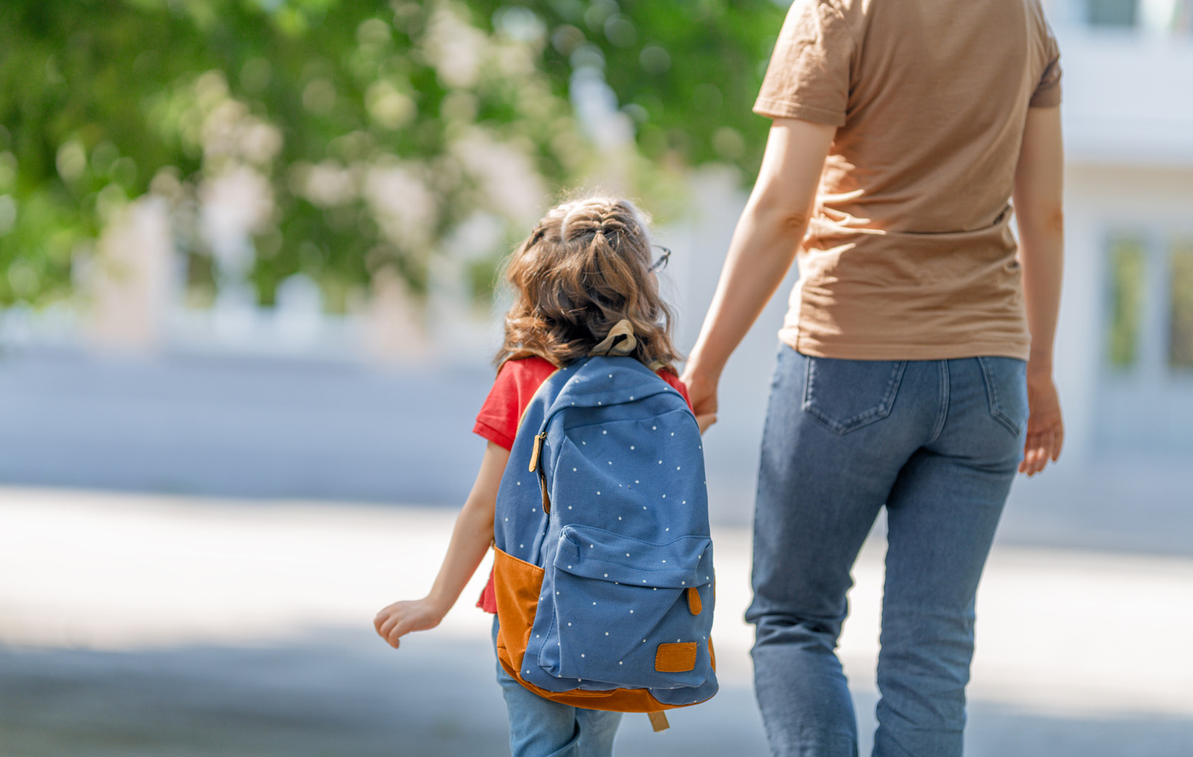
Perhaps the most difficult part of orientation happens at the school door. For this reason, it is important to keep goodbyes short, clear, warm, and consistent. Making the goodbye longer, or leaving secretly can increase uncertainty. Instead, we can give our child a hug and say:
“It may feel difficult to say goodbye right now. Your teacher will be with you. I will come and pick you up.”
But what if our child cries during separation but is still able to stay in the classroom with their teacher?
This is often not as negative as we may think. Crying does not necessarily mean that the child is unable to adjust to school. Sometimes tears stay at the door, and a few minutes later the child may become interested in a game.
They can miss someone, feel curious, become sad, and then start playing. Our role is not to remove all these emotions, but to give children space to experience them with a safe and supportive adult.
AND NOW WE ARE AT SCHOOL! – THE FIRST DAYS
The first weeks of school are a time when children are learning a new routine. During this period, we may see some changes such as wanting more closeness at home, finding it difficult to come to school in the morning, becoming more easily upset, or feeling more tired than usual after school.
Sometimes a child may seem completely fine at school but come home and suddenly feel nervous, become irritable, or ask for more attention. This can be surprising:
“They were fine at school. Why are they like this now?”
Because children often release the emotions of the day in the place where they feel safest.
New friends, teachers, rules, activities, sounds, and separation can require a lot of mental and emotional energy from a young child. Being more sensitive after school does not always mean that something bad happened at school. Sometimes it simply means:
“A lot happened today. I need some time to rest with you.”
For this reason, after school, the child’s first need may not be questions, but reconnection. A hug, a short game, reading a book together, or simply sitting quietly beside them can help them release the emotional load of the day.
Instead of asking, “How was school today?”, we can ask more specific and inviting questions such as:
“Did anything make you smile today?”
“What game did you enjoy the most?”
“Was there anything that surprised you today?”
However, sometimes a child may not want to talk at all. In that case, we do not need to push. We can simply say, “You can tell me when you are ready.”
Having a similar morning routine each day can also make goodbyes more predictable. A hug, the same short sentence, handing the child over to the teacher, and leaving can become a familiar routine. Over time, this can create a safe pattern in the child’s mind:
“Mum/Dad leaves, I stay with my teacher, and we meet again later.”
Consistency between home and school is also important. Instead of having worried conversations about school in front of the child, it can be helpful to show that the teacher and family are on the same team. This helps the child experience home and school not as two separate worlds, but as two safe spaces connected to each other.
Adjustment does not always happen all at once. First, the child may wait at the door. Then they may enter the classroom. Then they may approach a game. One day, they may even come home and tell you about something small that happened at school.
Sometimes, when we only look at the final result, we forget how much the child has learned along the way.
LET’S CONTINUE TO BE OUR CHILD’S SAFE SPACE
Our child walking into school does not mean that they need us less. On the contrary, in order to feel brave enough to explore the outside world, children need to know that there is a safe place they can return to.
Being a safe space does not mean making sure that our child never feels sad. It means being able to stay beside them when they are sad, accepting their feelings, and keeping healthy boundaries when needed.
When our child cries, instead of saying “Don’t cry,” we can say, “It may feel difficult to be away from me today.”Instead of saying, “There is nothing to be afraid of,” we can say, “You may feel a little worried right now. I am here with you.” Accepting a child’s feelings does not mean accepting every behaviour or every request. Kindness and boundaries can exist together.
It is also important for parents to notice and manage their own worries during this period. Children notice not only what we say, but also our tone of voice, facial expressions, and body language. It is completely natural to wonder, “Are they crying now?” or “Do they miss me?” However, whenever possible, it is valuable to communicate the feeling of “I trust you.”
We can also try to use realistic language when talking about school. Instead of saying, “You will have fun every day at school,” we can say, “Some days you may have lots of fun, and some days you may feel tired or miss us. Both are okay.” Rather than promising a perfect school experience, we can help children understand that different feelings can exist together.
Starting school is also a wonderful opportunity to support independence. Carrying their school bag, putting their belongings away, trying to take off their shoes, or expressing what they need are small responsibilities that can strengthen the feeling of “I can do it.” Instead of doing everything for them, we can say, “Would you like to try? I can stay beside you if you need me.” These small moments can become important steps toward independence.
After school, we do not need to plan activities for hours. Sometimes ten minutes of real play, reading a book, having a hug, or preparing food together is enough. What children need is not always more activities; sometimes they simply need a space to reconnect.
IS THE GOAL OF ADJUSTMENT TO NEVER STRUGGLE?
Perhaps this is one of the most important questions we can ask ourselves at the beginning of the school year.
The goal is not for our child to never cry, never miss us, or walk happily into the classroom every single morning.
The goal is for our child to know:
What to do when something feels difficult.
That they can trust an adult when they need help. That their feelings are accepted.
And that we will meet again at the end of the day.
Life will not always be easy. As our children grow, they will face new classrooms, new friendships, goodbyes, disappointments, and uncertain situations. We cannot remove every difficulty from their path. But we can be the safe place they can return to when life feels difficult.
Sometimes we think that getting used to school happens like switching on a light. In reality, adjustment is more like watching a little plant grow. We may not see a big change every day. Some days the leaves grow, and on other days the roots become stronger. But every small experience helps children learn something new about themselves and the world.
Crying a little less at the door today, waving goodbye to the teacher tomorrow, carrying their own school bag another day, or turning around and smiling at you before entering the classroom…
Each of these can be a small sign of growing confidence.
Instead of trying to change our child’s pace, we can choose to walk beside them. Sometimes holding their hand, sometimes taking a step back, and sometimes simply saying: “I am here.”
Because a secure relationship does not mean that a child never separates from us. It means they know that the relationship continues even when they are apart.